
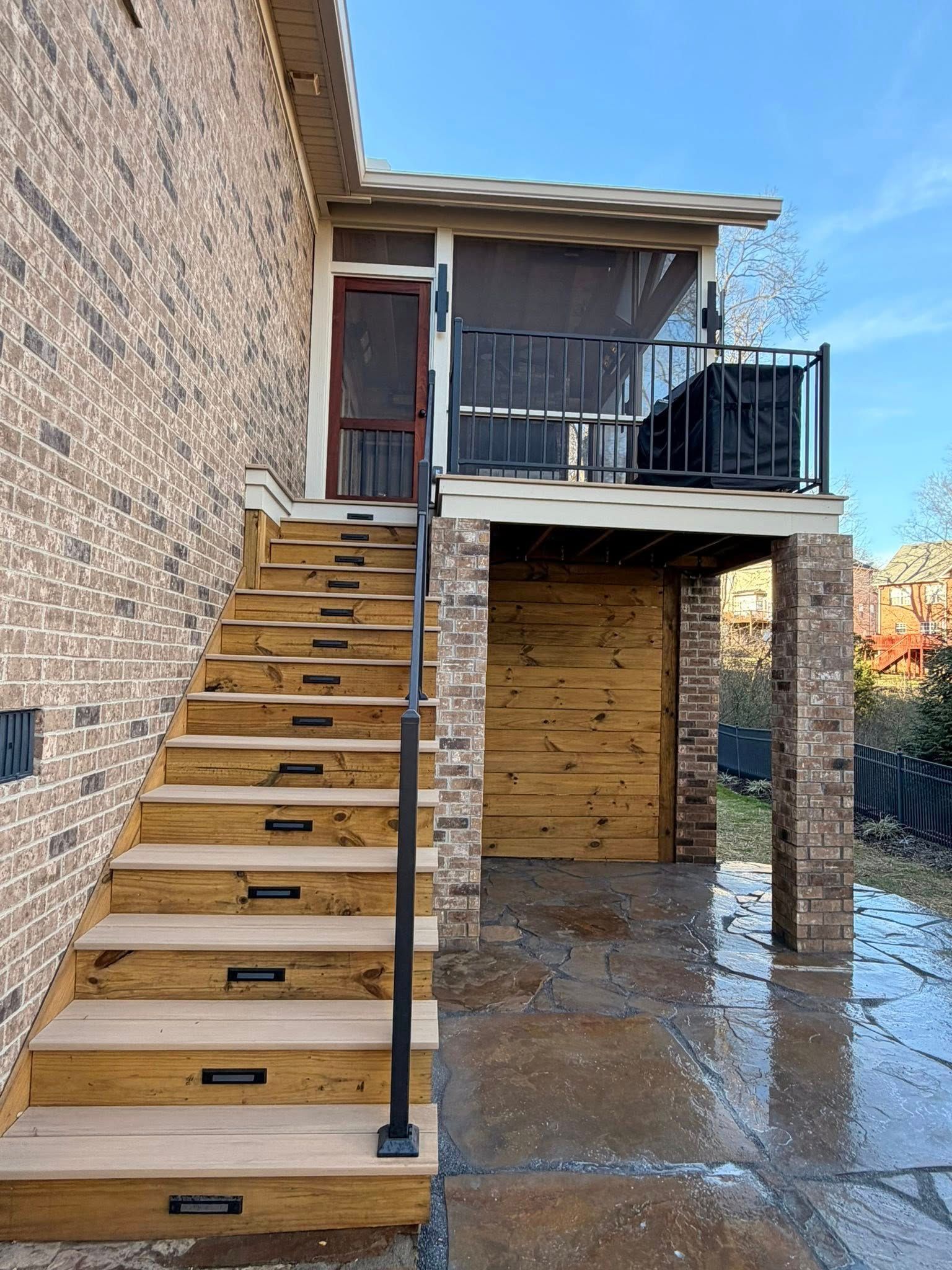
Hardscape Protection Against Joint Erosion
Paver Sealing Services in College Grove for driveways and patios showing sand loss, weed growth, or color fading
Sand washing out from between pavers creates gaps where weeds establish roots and where individual stones begin shifting under vehicle weight or foot traffic. Fineline Painting applies joint sand stabilization treatments and color-enhancing sealers to brick paver installations across College Grove, addressing both aesthetic degradation and the structural problems that develop when base materials erode. The process involves cleaning the hardscape, replacing lost sand, and applying protective coatings that lock joints in place while blocking UV rays that fade pigments and moisture that encourages organic growth.
Paver sealing starts with pressure washing to remove surface dirt, oil stains, and efflorescence—the white mineral deposits that appear when water pulls salts to the surface as it evaporates. Once the pavers dry completely, polymeric sand fills joints to proper depth, then sealer application penetrates the sand and coats the paver surface to create a barrier against water infiltration and weed seed germination. Different sealer types produce different results: some create a wet look that intensifies color, while others provide matte protection that maintains the original appearance without adding sheen.
Schedule a hardscape evaluation to assess joint condition and determine the appropriate sealer type for your paver installation.
What Sealing Prevents on Driveways and Patios
Unsealed pavers absorb oil, rust, and organic stains that penetrate below the surface and become permanent discolorations. Joint sand washes away during heavy rain, leaving gaps that allow pavers to rock individually rather than functioning as an interlocked surface. Weeds exploit these gaps, and once roots establish, they accelerate sand loss and shift pavers further out of alignment, creating trip hazards and uneven surfaces that continue deteriorating.
After sealing, paver surfaces shed water immediately instead of darkening when wet, and colors appear richer rather than chalky and faded. Joints remain filled with stabilized sand that doesn't wash out during storms, and the spaces between stones stay clear rather than sprouting grass or weeds within weeks of cleaning. Oil drips from vehicles sit on the surface where they can be rinsed off instead of soaking in and leaving permanent shadows, and the entire hardscape maintains a uniform appearance rather than showing random dark and light patches from moisture absorption.
Weed and moisture prevention continues as long as the sealer film remains intact, typically two to three years depending on traffic levels and sun exposure. Residential hardscape maintenance includes reapplication when water no longer beads on the surface or when joint sand begins eroding again. Color-enhancing formulations contain UV inhibitors that slow fading but don't completely stop it—south-facing installations still show more color loss than shaded areas, though the rate decreases significantly compared to unsealed pavers.
Answers to Paver Sealing Questions
Property owners considering sealer application usually ask about product differences, timing, and how local conditions affect hardscape performance.
What happens if pavers are sealed before joints are properly filled?
Sealer penetrates into empty joints and hardens without sand support, creating a brittle crust that cracks as pavers shift. Proper sealing requires filling joints completely with polymeric sand first, allowing it to cure, then applying sealer over stable, filled joints that distribute loads evenly across the paver field.
How do color-enhancing and natural-finish sealers differ in appearance?
Color-enhancing sealers darken pavers and add a glossy wet look that intensifies pigments, similar to how wet stones appear richer than dry ones. Natural-finish sealers provide protection without changing color or adding sheen, maintaining the original matte appearance while still stabilizing joints and blocking moisture penetration.
When should paver sealing be scheduled in Middle Tennessee?
Late spring through early fall offers the best conditions—pavers must be completely dry before sealing, and temperatures need to stay above fifty degrees for twenty-four hours after application to ensure proper curing. Fineline Painting avoids sealing during high humidity periods when moisture trapped under the film can cause hazing or bonding failure.
Why do some pavers show white haze after sealing?
Efflorescence continues forming after sealing if moisture is trapped in the pavers or base material during application. Sealing over damp pavers traps water that later evaporates and pushes mineral salts to the surface, creating white deposits under the sealer film that cannot be cleaned without stripping and reapplying the coating.
How long does joint sand stabilization last on driveways versus patios?
Driveways experience more erosion from vehicle tire action and concentrated runoff, typically requiring resealing every two to three years. Patios with foot traffic only maintain stable joints longer, often four to five years, since they don't encounter the shearing forces that break down polymeric sand bonds and wear through sealer films faster.
Fineline Painting inspects joint condition, paver surface quality, and drainage patterns before recommending sealer types and preparation requirements. Call (615) 582-9149 to arrange paver assessment and discuss driveway or patio sealing options for your property.