
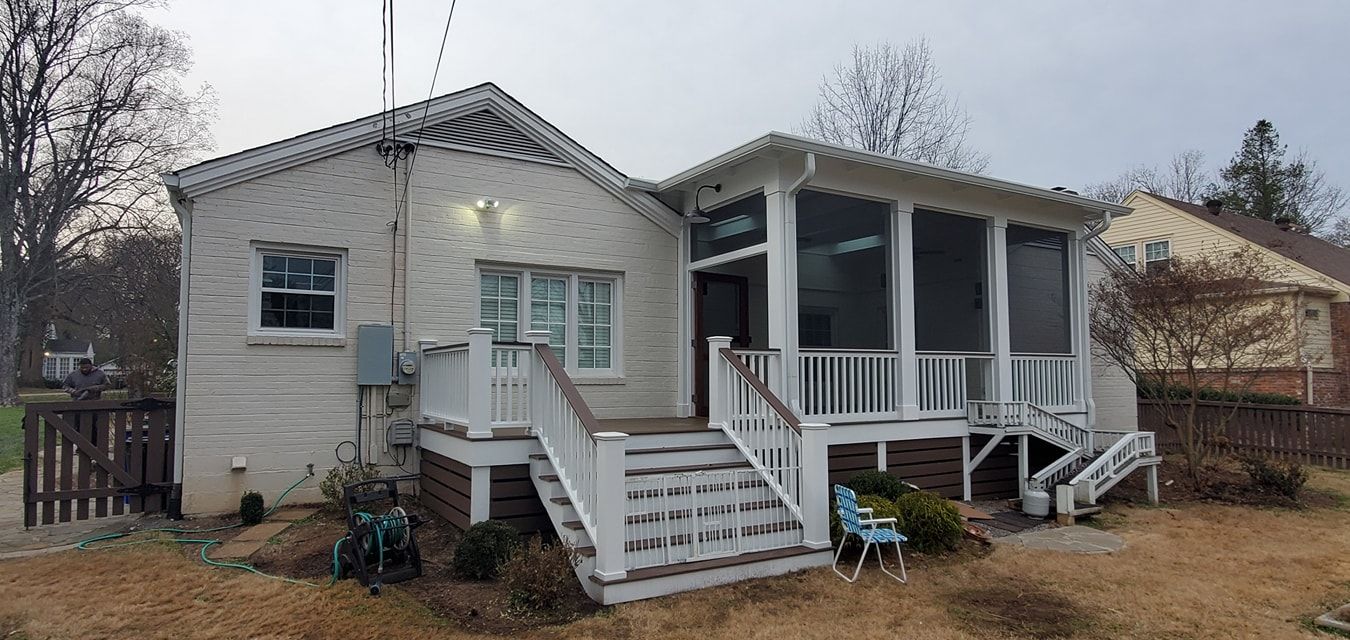
Structural Platforms That Handle Year-Round Use
Deck Repair & Deck Installation in College Grove for outdoor spaces showing board rot, railing instability, or structural settlement
A rotten deck board flexes under weight and shows dark staining where moisture has broken down the wood fiber below the surface. Fineline Painting addresses these failures through rotten board replacement and structural deck repairs that restore load-bearing capacity before refinishing work begins. New deck construction involves selecting between wood species that accept stain naturally and composite materials that resist moisture but limit finishing options. The decision affects maintenance requirements, initial cost, and how the platform performs through Middle Tennessee's humidity and temperature cycles.
Deck installation starts with establishing level foundation points that prevent the structure from settling unevenly as soil compacts under post footings. Framing must account for joist spacing appropriate to decking material—wood planks span longer distances than some composite products, which require closer support to prevent bounce. Stair and railing repairs focus on connections where fasteners have loosened or wood has split around mounting points, compromising safety even when the damage isn't immediately visible from ground level.
Schedule a structural assessment to identify failing components and review options for repair versus full platform replacement.
How Proper Deck Construction Prevents Future Failures
Joists installed with proper flashing and drainage gaps allow water to run off rather than pooling against rim boards where rot typically starts. Fasteners driven through deck boards into joists must penetrate deep enough for secure hold without splitting the wood, and spacing between boards needs to allow expansion without creating gaps wide enough to catch furniture legs or trap debris. These details determine whether a deck lasts fifteen years or begins showing problems within five.
After installation or repair, the platform feels solid underfoot without flex or bounce, and railings don't shift when you lean against them. Stairs meet treads squarely without gaps, and the entire structure remains level rather than sloping toward the house or away from it. Board surfaces align evenly without protruding fastener heads or lips where planks have cupped due to moisture imbalance, and composite installations show uniform color without the streaking that occurs when panels from different production lots are mixed.
Custom outdoor living spaces extend beyond basic rectangular platforms to include multi-level designs, built-in seating, and pergola integration. Wood deck installations use pressure-treated framing with cedar or composite decking depending on desired appearance and maintenance tolerance. Structural repairs address not just visible damage but underlying issues like undersized joists, inadequate ledger board attachment, or missing joist hangers that compromise the platform's ability to carry design loads safely.
Frequent Deck Construction and Repair Questions
Homeowners considering deck work typically ask about material choices, repair extent, and structural concerns before visible damage spreads.
What indicates a deck board needs replacement rather than just refinishing?
Soft spots that compress when probed with a screwdriver, dark staining that doesn't clean off, or visible fungal growth indicate rot has penetrated below the surface. These boards have lost structural integrity and will continue deteriorating even if coated, so replacement is necessary before the damage spreads to adjacent lumber or underlying joists.
How do wood and composite decking compare for College Grove installations?
Wood accepts stain and paint, costs less initially, and can be sanded or refinished when worn, but requires regular maintenance to prevent rot and splitting. Composite resists moisture and insect damage without treatment, maintains color longer, but costs more upfront and cannot be refinished if scratched or faded beyond the manufacturer's warranty period.
When should deck railings be considered unsafe and require repair?
Railings that shift more than a quarter inch when pushed, balusters with cracks at mounting points, or top rails that bounce when leaned against all indicate connection failure that compromises fall protection. Fineline Painting replaces damaged sections and reinforces mounting points to restore stability before someone puts weight on a compromised component.
What causes deck stairs to feel unstable even when boards look solid?
Stringers—the angled supports that carry stair treads—often rot where they contact the ground or where water collects at the top landing connection. This damage isn't visible from above but causes the entire stair assembly to flex and shift laterally, requiring stringer replacement to restore safe load transfer from treads to foundation.
How deep should deck post footings be installed in Middle Tennessee?
Footings must extend below the frost line, typically eighteen to twenty-four inches in this region, to prevent heaving as soil freezes and thaws. Shallow footings allow the deck to shift seasonally, opening gaps between the platform and house and stressing ledger board connections that can eventually pull away from the structure.
Fineline Painting inspects framing, decking, and connection points to determine whether repairs address your concerns or whether replacement provides better long-term value. Reach out by calling (615) 582-9149 to arrange evaluation of your deck's structural condition and discuss installation or repair options.