
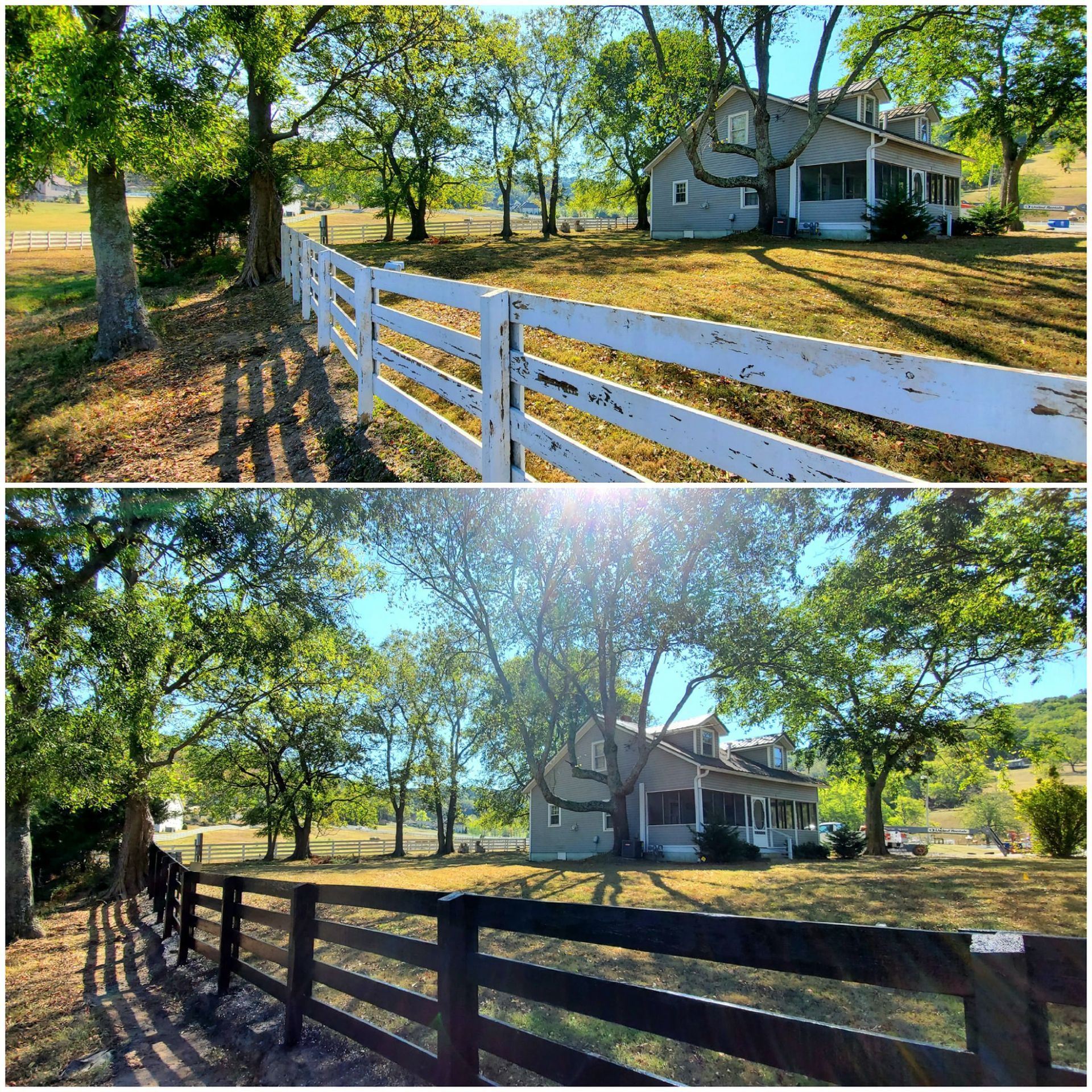
Wood Protection That Survives Seasonal Moisture
Fence Painting & Fence Staining in College Grove for wood surfaces showing gray weathering or water penetration
Wood fences across Middle Tennessee turn gray and begin splitting within two years of installation when left unprotected from rain and humidity cycles. Fineline Painting applies UV and moisture protection coatings to cedar, pine, and privacy fence installations after cleaning and preparing the wood to accept stain or paint. The difference between these two approaches determines how the fence looks and how often it requires maintenance: transparent stains show wood grain but need reapplication every two to three years, while solid color treatments provide longer protection by forming a thicker barrier against water absorption.
Fence staining begins with pressure washing to remove surface dirt, mildew, and mill glaze—a waxy residue from sawing that prevents stain penetration if not removed. Once the wood dries completely, oil-based or water-based stains soak into the grain rather than sitting on top like paint, allowing the wood to breathe while blocking UV rays that break down lignin and cause graying. Repainting old fences requires additional steps: scraping loose coatings, sanding rough areas, and priming bare spots before applying finish layers that bridge existing color without peeling at the edges.
Arrange an on-site assessment to determine whether your fence needs cleaning and staining or full paint refinishing.
Why Wood Fences Fail Without Protective Treatments
Untreated wood absorbs moisture during rain, then releases it as humidity drops and temperatures rise. This constant expansion and contraction opens cracks along the grain, particularly at board ends and knot clusters where density varies. Once cracks form, water penetrates deeper into the wood, accelerating rot and creating conditions where fungal growth takes hold below the surface before visible damage appears.
After staining or painting, fence boards maintain their original color rather than fading to silver-gray, and water beads off the surface instead of soaking in and raising the grain. Joints between boards and posts no longer show dark staining from moisture accumulation, and the wood feels smooth rather than rough and splintered. These protective coatings also prevent tannin bleed—the brown streaking that appears on light-colored fences when water pulls natural oils from cedar or redwood.
The service includes treatments for railings and gates, which receive more direct handling and weathering than field sections. Fence cleaning and prep work removes previous failing coatings before new applications, ensuring adhesion to the actual wood surface rather than to loose material that will separate within months. Long-lasting exterior wood protection depends on coating penetration and the product's ability to flex with the substrate as temperatures change throughout the year.
Common Questions About Fence Treatments
Clients usually want to understand product differences, maintenance intervals, and how local weather affects wood fencing in College Grove.
What is the difference between transparent and solid color fence stains?
Transparent stains penetrate the wood and allow grain patterns to show through while providing UV and moisture protection, but they fade faster and require reapplication every two to three years. Solid color stains and paints create a thicker surface film that hides the wood grain, offers longer protection, and can last five to seven years before needing refinishing.
How does humidity in Middle Tennessee affect fence staining timelines?
High humidity slows stain absorption and drying, so scheduling during dry periods with moderate temperatures ensures the product fully penetrates and cures before the next rain. Applying stain when wood moisture content exceeds fifteen percent traps water inside and leads to coating failure as the wood tries to dry outward.
Why do some fence boards gray faster than others after treatment?
Vertical boards receive more direct rain runoff and dry slower than horizontal rails, causing uneven wear patterns. Boards facing south or west also experience more UV exposure, which breaks down stain pigments faster than shaded sections, leading to color variation across the same fence line.
What preparation is required before restaining a previously treated fence?
Fineline Painting cleans the surface to remove dirt and mildew, then lightly sands areas where the old stain has worn completely away. If previous coatings are peeling or flaking, those sections get stripped to bare wood before new stain application to prevent layering over failing material.
How long should new fence wood dry before staining?
Pressure-treated lumber contains high moisture content from the preservation process and needs four to eight weeks of drying time before stain will penetrate properly. Untreated cedar or redwood can be stained immediately after installation if the wood has been stored dry and shows no surface moisture when tested.
Fineline Painting inspects fence condition and previous coating performance to recommend the most durable treatment approach. Contact the company at (615) 582-9149 to schedule fence evaluation and discuss stain or paint options for your property.