
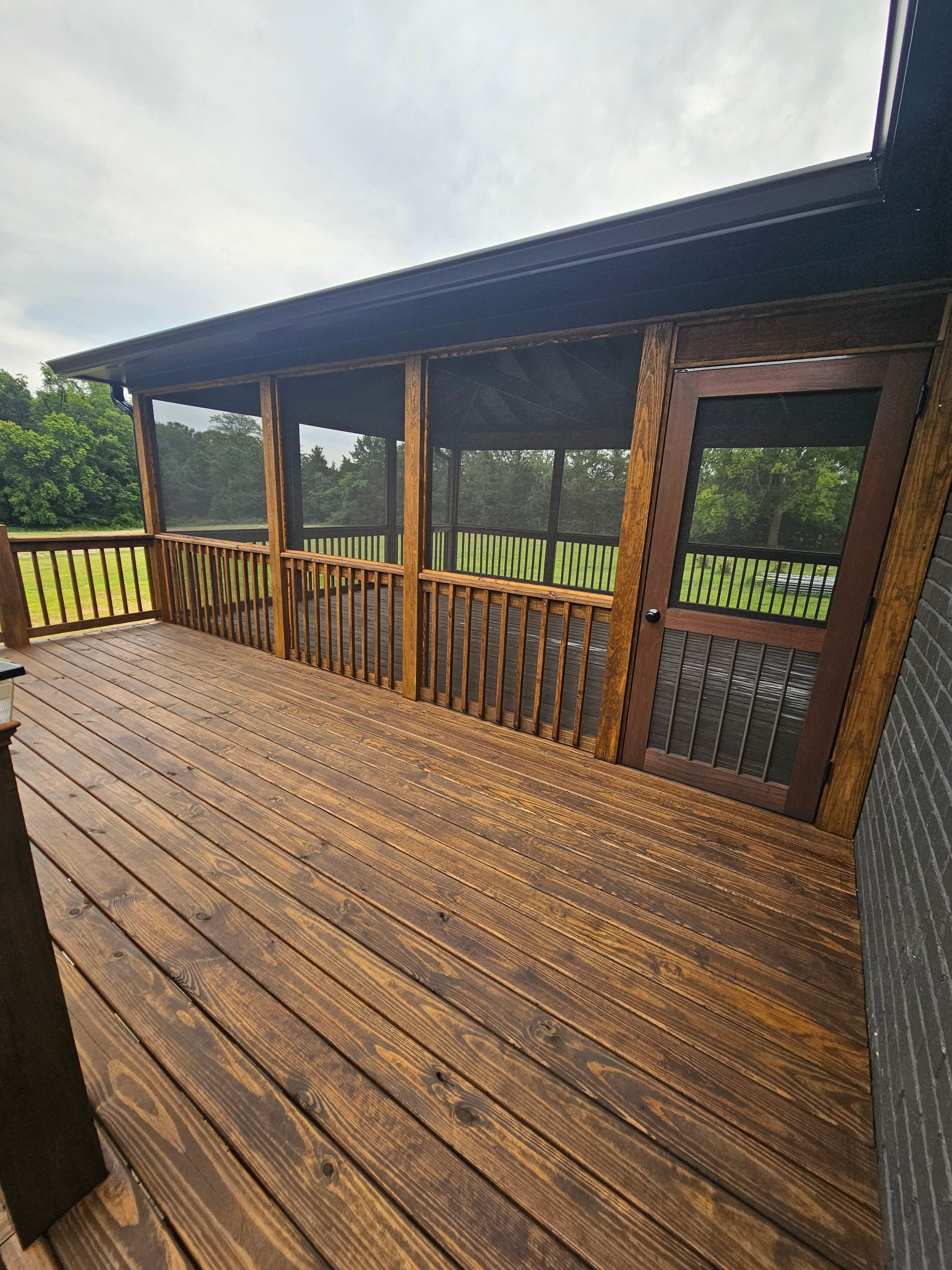
Weatherproof Protection for Elevated Wood Surfaces
Deck Staining & Deck Painting in College Grove for platforms showing fading, water absorption, or coating failure
Horizontal deck surfaces collect water and hold it longer than vertical siding, accelerating wear on any protective coating applied to the wood. Fineline Painting handles deck staining and deck painting across College Grove properties where platforms show signs of moisture penetration or where previous treatments have peeled away from high-traffic areas. The process involves determining whether the deck needs transparent stain that penetrates the wood, solid color stain that hides grain while allowing some breathability, or full paint coverage that provides maximum protection at the cost of masking natural wood appearance.
Deck refinishing begins with cleaning to remove ground-in dirt, algae growth between boards, and any loose coating material from previous applications. Pressure washing clears debris from gaps and exposes bare wood where old stain has worn through, but excessive pressure damages soft grain and raises fibers that create rough surfaces. After drying, solid color or transparent stains soak into the wood to varying depths depending on formulation, while paint creates a surface film that requires proper adhesion to prevent peeling when the wood expands and contracts.
Request a deck inspection to assess coating condition and determine the appropriate treatment level for your platform's current state.
What Changes After Protective Coatings Cure
Properly stained decks shed water immediately rather than allowing it to soak into the grain and darken the wood. The surface feels smooth underfoot instead of rough and splintered, and boards maintain consistent color rather than showing the blotchy pattern that develops when UV exposure breaks down unprotected lignin. Railings and stairs treated with the same coating system match the field color, creating visual continuity across all platform elements.
Weatherproof protective coatings include fungicides that inhibit mold growth in shaded areas where moisture lingers after rain. These products also contain UV blockers that slow the graying process, though no coating completely prevents color change on horizontal surfaces exposed to full sun and standing water. Restoration for faded or peeling decks requires more aggressive prep than maintenance staining—failed coatings must be stripped or sanded off before new applications, since layering over loose material simply delays the next round of peeling.
The service covers railings and stair treatments, which experience more direct handling and foot traffic than deck fields. Solid stains bridge minor surface imperfections and provide thicker protection than transparent products, while full paint coverage offers the longest service life but requires complete removal if you later want to return to a natural wood appearance. Choosing between these options depends on current deck condition, desired maintenance intervals, and whether you prefer visible grain or uniform color.
Questions Property Owners Have About Deck Treatments
Deck refinishing decisions often involve product selection, timing considerations, and understanding why previous treatments failed prematurely.
What causes deck stain to peel in some areas but not others?
Peeling typically occurs where moisture is trapped under the coating—often near planters, under furniture that blocks airflow, or at board ends that absorb more water than field sections. Stain applied over damp wood or mill glaze also fails to bond properly and lifts as the substrate expands during humid periods.
How do transparent and solid deck stains perform differently in College Grove?
Transparent stains allow more UV penetration and typically fade within two years on horizontal surfaces exposed to full sun, requiring more frequent reapplication. Solid stains provide better UV blocking and color retention but show wear patterns more visibly in high-traffic areas where foot traffic wears through the pigmented layer.
When should deck staining happen relative to seasonal weather?
Spring application allows coatings to cure before summer heat and UV exposure begin, while fall staining protects the wood through winter moisture cycles. Fineline Painting schedules work during dry periods when wood moisture content is below fifteen percent and temperatures stay above fifty degrees for proper product penetration and curing.
Why does the same stain look different on deck boards versus railings?
Vertical railing surfaces shed water quickly and receive less direct UV exposure than horizontal deck boards, so coatings last longer and fade slower on these elements. Railings also experience less abrasion from foot traffic, maintaining their finish while deck fields show wear patterns within the first year after application.
What preparation is needed before restaining a deck that was treated three years ago?
Cleaning removes surface contaminants and mildew, then light sanding smooths raised grain and feathers edges where old stain remains intact. Areas where previous coatings have completely worn away get extra attention to ensure the new stain penetrates evenly and matches surrounding sections that still hold some pigment.
Fineline Painting evaluates existing coating condition and wood quality to recommend refinishing approaches that match your maintenance preferences and budget. Call (615) 582-9149 to schedule deck evaluation and discuss staining or painting options.